Ontology Versioning Strategies for Evolving Schemas
Managing evolving ontologies requires tracking what changed, why, and who must adapt.
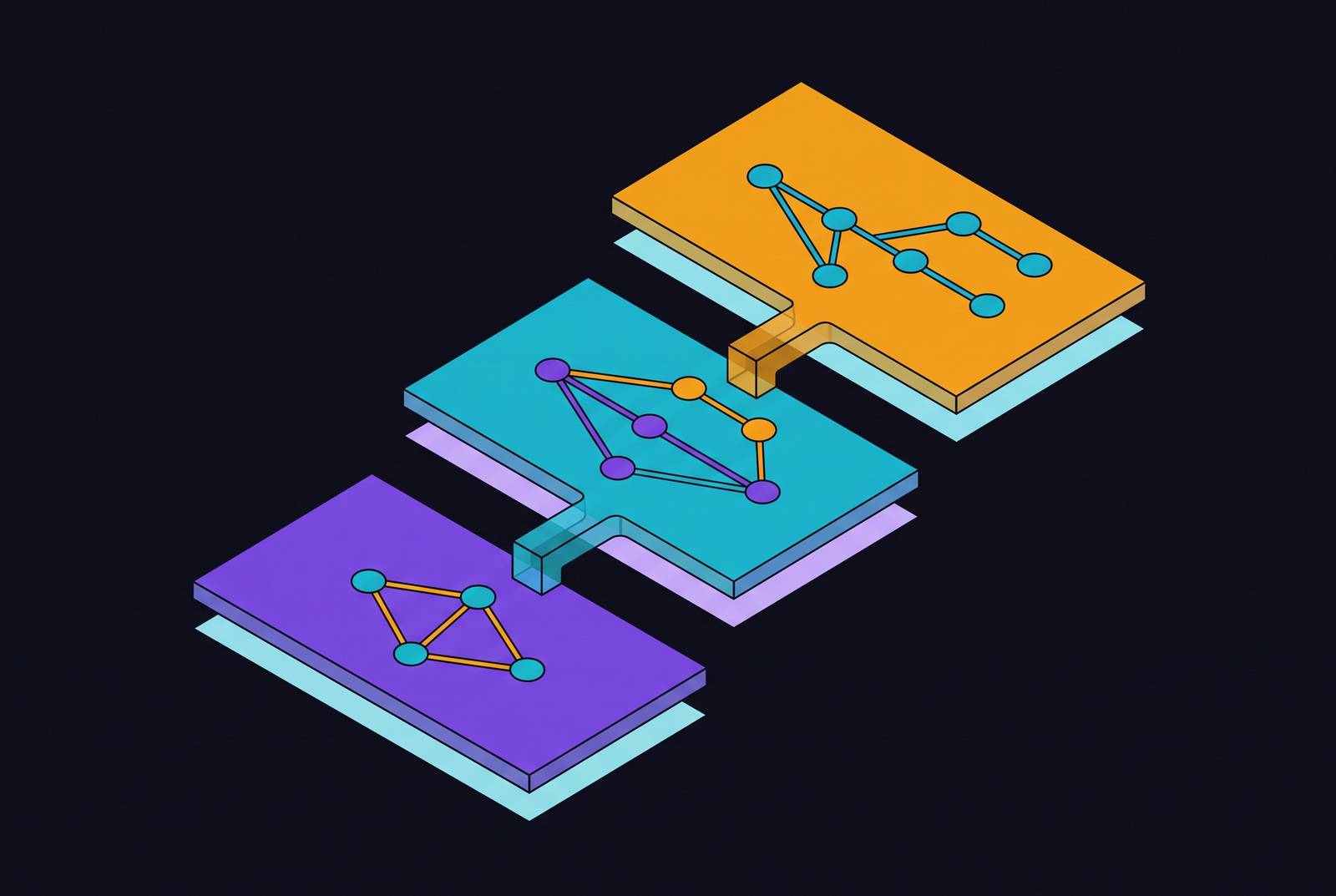
Ontology versioning records how the definitions and relationships in a knowledge graph change over time. When business applications or AI agents rely on those definitions, a schema change can affect queries, integrations and decisions. Teams need to know what changed, why it changed and which consumers need to adapt.
A documented schema can fall out of step with the data and systems it describes. A class may change meaning, a property may disappear, or a new source may use a different definition. These changes can produce incomplete retrieval, broken queries or misleading context for an AI agent. Versioning helps teams detect and manage those differences before they reach downstream workflows.
Ontologies need to evolve as business terms, rules and data sources change. Updating a date on the whole file is not enough to explain that evolution. Record which classes and properties changed, the reason for each change, its compatibility impact and the action required from consumers.
What ontology versioning means, and what it is not
An ontology is not a business glossary, and it is not a taxonomy, even though the three get used interchangeably in casual conversation. A glossary defines terms for human readers. A taxonomy organizes concepts into hierarchies. An ontology does something stricter: it formally specifies classes, properties, and the logical relationships between them, in a way a machine can reason over. Each layer changes at a different pace and carries a different risk profile. Editing a glossary entry to clarify a definition is low-stakes. Deleting a class from a production ontology that forty downstream systems import is not. Treating them the same way ends up either drowning glossary edits in unnecessary approval chains or letting ontology changes slip through with the same casualness as a wiki fix.
There's also a difference between schema versioning and semantic drift. Versioning is deliberate: someone proposes a change, someone reviews it, a version number moves. Drift is what happens in the absence of that discipline, when "customer" means one thing to the sales team's system and something quietly different to finance's, and nobody ever approved the divergence, it just happened over eighteen months of separate teams making separate local decisions.
The W3C's framing of vocabulary management is useful here because it reframes the task correctly: managing an ontology means identifying, documenting, and publishing its terms so other applications can cite and reuse them reliably. It is not simply a matter of opening a modeling tool and editing fields. A term in an ontology is a public commitment, in the same sense that a published API endpoint is a public commitment; other systems build on top of it, and breaking that commitment without notice has consequences that ripple outward.
The most common failure mode in practice is what might be called the version documentation gap. A team updates the version number, applies that single number to the entire ontology file, and calls it done. But if a downstream consumer only imports thirty of the ontology's two thousand classes, that consumer has no way of knowing whether any of those thirty were among the ones changed. The version number tells you something changed. It tells you nothing about what.
Classifying changes before versioning them
Change management is flagged repeatedly in ontology evolution research as one of the field's unresolved problems, largely because most published ontology work simply doesn't keep a record of changes as they happen. Without that record, nobody can trace a change forward to see its effects or backward to understand why it was made. Fixing that starts before anyone touches a version number, with a basic act of classification.
Three categories matter. Backward-compatible additions are new classes, properties, or relationships that don't alter anything already in the model. Existing consumers can ignore them entirely and keep working exactly as before. Non-breaking modifications are trickier: these are renames or restructurings that preserve the underlying logical identity of a term even though its label or position changed. Then there are breaking changes: deleting a class, an attribute, or a relation; tightening a constraint so that data which used to validate no longer does. These demand explicit notice to consumers and an actual migration plan instead of a changelog line buried in a release notes doc nobody reads.
The rename trap deserves its own callout because it's where a lot of quiet damage gets done. A rename that keeps the same meaning underneath, say, relabeling a property's display name from hasAddr to hasAddress while the logical identity stays constant, is safe. But a rename that looks structurally identical while the underlying meaning has shifted (the property now captures billing address instead of shipping address, say) is one of the most common sources of downstream breakage in ontology work, precisely because it doesn't look like a breaking change on the surface. It passes a naive diff. It fails in production, in the query that assumed the old meaning.
Changes to primary or canonical identifiers deserve the most caution of all. Re-keying an entity's canonical identity requires deliberate planning, because relationships and downstream edits anchored to that identifier can be silently orphaned if the re-key happens without a coordinated migration path.
Applying semantic versioning to ontologies
Software engineers have used semantic versioning, the X.Y.Z pattern, for years, and it maps onto ontologies with only minor adjustment. The major number (X) increments when backward compatibility breaks: a class, attribute, or relation is deleted, or a URI changes. The minor number (Y) increments for backward-compatible additions: new classes, properties, relationships that existing consumers can simply ignore. The patch number (Z) is reserved for fixes that touch nothing structural: corrected definitions, fixed labels, cleaned-up metadata.
This isn't theoretical. The European eProcurement Ontology, maintained by the EU Publications Office, runs on exactly this pattern, with accompanying change notes tied to each release. A breaking change there, such as deleting a class or relation, triggers a major version bump as a matter of policy, not convention.
Embed the version number in the artifact itself so it travels with the ontology and remains available to every consumer that imports it.
Semantic versioning solves exactly one problem: it tells a consumer, at a glance, what class of change occurred. It does not say what changed, who approved it, or why the change was made. That's a different job, and it belongs to the changelog.
Changelog-driven governance as the audit layer
Every release of an ontology should generate a changelog entry, and that entry needs five things at minimum: what changed, why it changed, who approved it, when it takes effect, and which downstream consumers are affected. Skipping any one of these degrades the changelog into a list of diffs nobody can act on.
Three practical scenarios make explicit diff tracking non-optional rather than a nice-to-have. An auditor asks when a given entity type entered the model and who signed off on it, an answer the version number alone can't supply. An engineering team needs to know, after a schema change ships, which downstream systems or documents now need updating, an impact-analysis question that only works if the changelog says what was touched. And someone, at some point, needs to revert to a prior schema version entirely, which is only possible if the boundary between versions was recorded explicitly rather than inferred after the fact.
One structured approach from ontology evolution research proposes splitting the record into two graphs: a SchemaVersionGraph tracking operations on the schema itself, and an InstanceVersionGraph tracking operations on the data instances governed by that schema. Each captures which elements were affected, alongside metadata: version number, date, author, and a plain-language description of the change. That separation matters because schema change and instance change carry different risk profiles and different audiences.
There's an institutional-memory argument here too, and it's easy to underrate. A new hire reading through a changelog doesn't just learn what the current model contains, they learn the reasoning trail behind how it got there: why a class got split in two, why a property was deprecated instead of deleted. The changelog functions as organizational memory as much as a technical log of diffs.
Modular ontology design as a strategy for limiting change blast radius
Ontologies rarely stand alone. Most reuse or extend pieces of other ontologies, and the dependencies between those pieces exist at every level of granularity, from a single property up to an entire subdomain. That's precisely why modularization keeps coming up as necessary: without it, every change risks rippling through the whole graph regardless of whether it needed to.
The core idea is straightforward. If a domain module, say, one covering regulatory compliance terms, needs a major version bump because a class got deleted, that bump should be contained to that module. Teams building on unrelated modules, a product catalog module, for instance, shouldn't need to migrate anything just because compliance restructured its internals.
Making that work in practice means a few disciplines. Modules should be split along lines of change rate and risk, not just subject-matter convenience: regulatory terms change on a compliance calendar, product terms change on a release calendar, and forcing them into one monolithic file means every governance cycle has to account for both at once. Dependencies between modules need to be declared explicitly, so that "who does this affect" from the changelog section can be traced automatically instead of guessed at. And a module's public interface, the classes and properties it exposes for other modules to import, deserves the same versioning rigor an engineering team would apply to a public API surface.
A downstream consumer who only imports thirty classes from a two-thousand-class ontology can finally know, from a per-module changelog, exactly whether those thirty were touched, without reading a diff against the entire file.
Backward-compatible extension patterns for routine evolution
In a well-run ontology, most changes should be minor or patch bumps. If an organization finds itself incrementing the major version every few months, that's a signal of a governance problem well before it's a modeling problem, because it suggests changes aren't being scoped carefully enough to stay backward-compatible when they could be.
A handful of patterns cover the bulk of routine, safe evolution. Folding in new domain knowledge is safest and most common when done by adding new classes, subclasses, or properties that existing consumers can simply ignore. Adding an optional (non-required) property to an existing class doesn't invalidate any instance that predates it, since consumers who never populate the new property remain perfectly valid. Adding a subclass beneath an existing class preserves the parent's meaning for any consumer not yet distinguishing at that finer level of detail. And enriching annotations, better labels, clearer definitions, added provenance notes, never breaks anything downstream, because annotations carry no logical weight in the reasoning layer.
What counts as "backward-compatible" is a narrower category than developers might assume from API design. Tightening a constraint, changing a property from optional to required, or narrowing an allowed value range, can invalidate instances that were perfectly valid a moment before, even though no class was deleted and no URI moved. That's a breaking change in substance even if it looks minor in form, and it needs to be classified as one.
One more note, specific to newer workflows: where an LLM assists in proposing schema changes, the reasoning behind its suggestion is part of the audit trail, not incidental output to be discarded once a human approves the change. If that reasoning isn't captured and stored, the governance record has a hole in it exactly where an automated decision was made.
Breaking-change protocols: when incompatible changes are unavoidable
Deleting a class, an attribute, or a relation triggers a major version bump. Structural changes of equivalent impact warrant the same treatment. There's no ambiguity here, and no soft landing that avoids the bump while doing the same thing under a different name.
What a responsible breaking-change protocol looks like has a few fixed components. Known downstream consumers get notified before the major version ships, with a defined migration window, not a surprise on release day. The affected class or property gets marked deprecated in a minor version first, giving consumers time to adjust before the actual deletion lands in the next major release. A written migration guide accompanies the change: what changed, what replaces it, how existing data should be transformed, and this guide becomes part of the permanent changelog record rather than a one-off email. And existing consumers stay pinned to the prior supported version until their migration is complete or their support window ends; unsafe compatibility shims, patches that paper over the incompatibility without actually resolving it, should be refused outright rather than quietly applied to make the problem disappear from view.
SHACL, the W3C standard for defining constraint shapes over RDF graphs, gives this process a machine-checkable guardrail. SHACL shapes can validate, structurally and through targeted queries, whether a proposed change would invalidate instances that were previously valid, catching ungoverned breakage before it ever reaches production rather than after a downstream system starts erroring out.
Rollback is only a real option where the transition is actually reversible. If a breaking change involves migrating data and then discarding the prior format, that's an irreversible boundary, and it needs to be flagged and surfaced during approval, before the change executes, not discovered afterward when someone asks to revert and finds there's nothing to revert to.
Binding decisions to ontology versions for traceability and compliance
Semantic evolution must never retroactively reinterpret a decision that was already made. If an ontology's definition of "high-risk transaction" shifts next quarter, that shift cannot reach backward and silently reclassify a decision an AI system made last quarter under the old definition. Every output produced by an automated system needs to be stamped with the exact ontology version hash active at the moment of inference, not merely a date, but the specific governed semantic state that produced that result.
This closes off a genuinely dangerous failure mode: definition laundering. Without cryptographic binding between a decision and the ontology version that governed it, someone could modify a semantic definition after the fact and retroactively alter what a past compliance classification means, without touching a single row of data or a single line of code. Only the meaning of the term moved. That kind of manipulation is invisible unless decisions are pinned to version-stamped records that can't be quietly rewritten after the fact.
Auditors are already asking for this. Under SOC 2 Type II review, an AI-aware auditor's first requests typically include model lineage, prompt and inference logs, and drift-monitoring output. An ontology version stamp on every AI decision is the semantic equivalent of model lineage, the record that shows exactly which governed state of meaning produced a given output.
Standards-based provenance frameworks can give this a formal foundation, linking a decision to the model artifacts and activities that generated it and supporting the traceability chains that emerging AI governance requirements demand auditors to be able to reconstruct.
Active ontologies: keeping the versioned model synchronized with live operational reality
A static ontology ships once and starts decaying the moment it does. Agents built to reason against a static model eventually query a version of reality that no longer exists, a column got deprecated, a policy changed, a dashboard the ontology assumed was live went stale months ago, and none of it made it back into the model. The agent doesn't know any of this happened. It answers anyway, and it answers wrong, because it's reasoning from a description of the world rather than the world itself.
An active ontology closes that gap by staying continuously bound to the operational signals around it: live metadata, lineage, governance state. When something changes downstream, the model finds out.
Atlan describes an architecture with four connected graphs: a data graph for assets, schemas and lineage; a governance graph for ownership, policy and quality signals; a knowledge graph for business terms and relationships; and an active ontology graph for formal classes, properties and constraints. In that design, the graphs share a metadata lakehouse so that operational changes can propagate across them. This is one architectural approach. Teams can implement the same goal of keeping definitions synchronized with the systems they describe using different storage and integration designs.
That's the real argument for treating versioning as a governance discipline rather than a filing exercise. A version number, a changelog entry, a deprecation window: none of these matter for their own sake. They matter because they're the mechanism by which a model that has to keep changing stays trustworthy enough for a system, or an agent, or an auditor, to bet on it.
Publication note: The Connected Layer is commissioned by Nodes. Articles use AI-assisted research and writing.
Sources
- Active Ontology: The 2026 Default for Enterprise AI | Atlan
- Top 5 Tips for Managing and Versioning an Ontology - Enterprise Knowledge
- (PDF) Ontology versioning in an ontology management framework
- (PDF) Change Management: The Core Task of Ontology Versioning and Evolution
- Ontology versioning on the semantic web | Proceedings of the First International Conference on Semantic Web Working
- talent500.com