Modeling Decisions and Their Evidence as First-Class Graph Nodes
Agents need structured proof of reasoning, not just logs of what happened.
An agent pulls the record of a prior approval, acts on it, and gets the outcome wrong, because the record only shows that something happened, not why. Most enterprise systems log outcomes, not reasoning. They store "user X updated field Y at timestamp Z," but not which alternatives were weighed, which policy version applied, or what happened after. That reasoning, when it exists at all, sits in narrative notes, email threads, or flat audit logs that nobody, human or machine, can actually traverse.
This matters more now because agentic systems depend on it directly. It can't pause mid-task to go dig through five systems and piece together why a similar case was handled a certain way last year. When it acts on bad precedent or gets something wrong, there's no record a team can walk through to find out what went wrong and fix the pattern.
The core issue is architectural. Fixing this requires changing what gets stored in the first place, and what gets stored determines whether an agent can act on real precedent or just a guess dressed up as one.
Modeling a decision as a first-class graph node
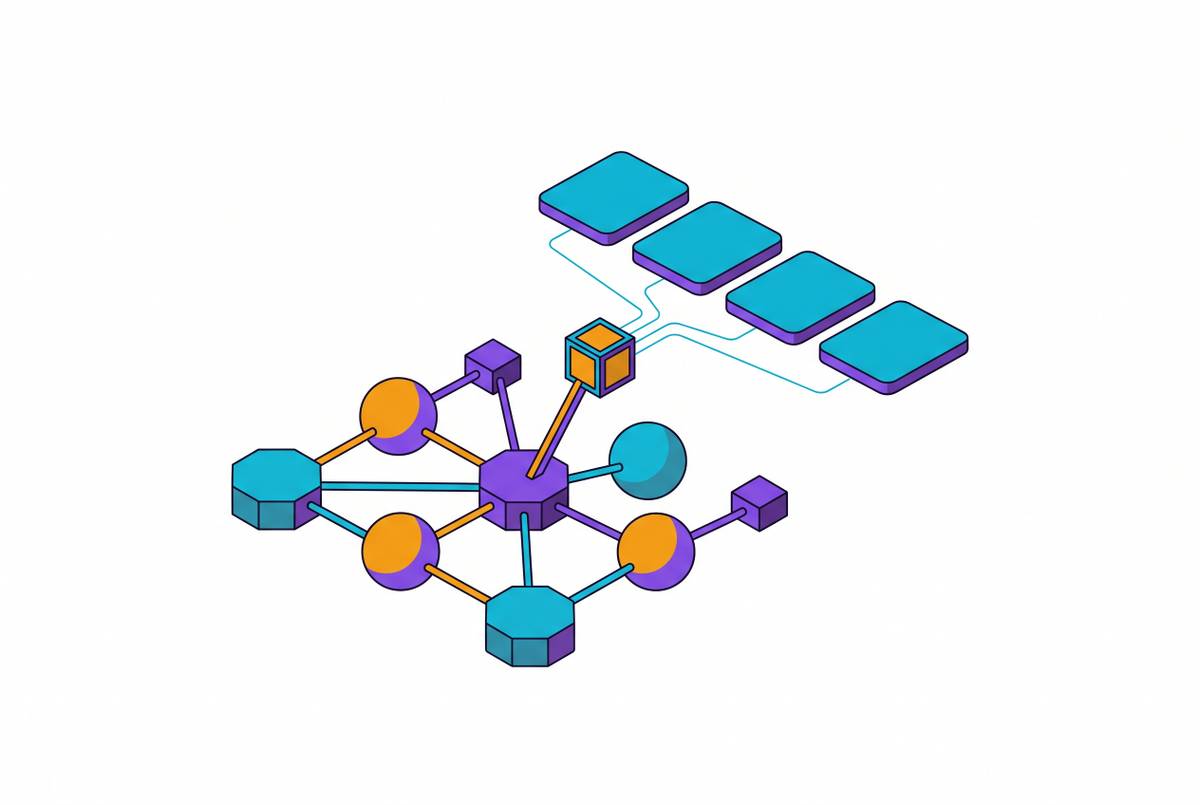
Making a decision a first-class node means it carries its own properties, its own connections to other entities, and its own record of where it came from, rather than acting as a pointer to a document somebody has to open and read.
A decision node holds several things at once. It also carries any exceptions, the times a human overrode the recommendation, along with the reason why.
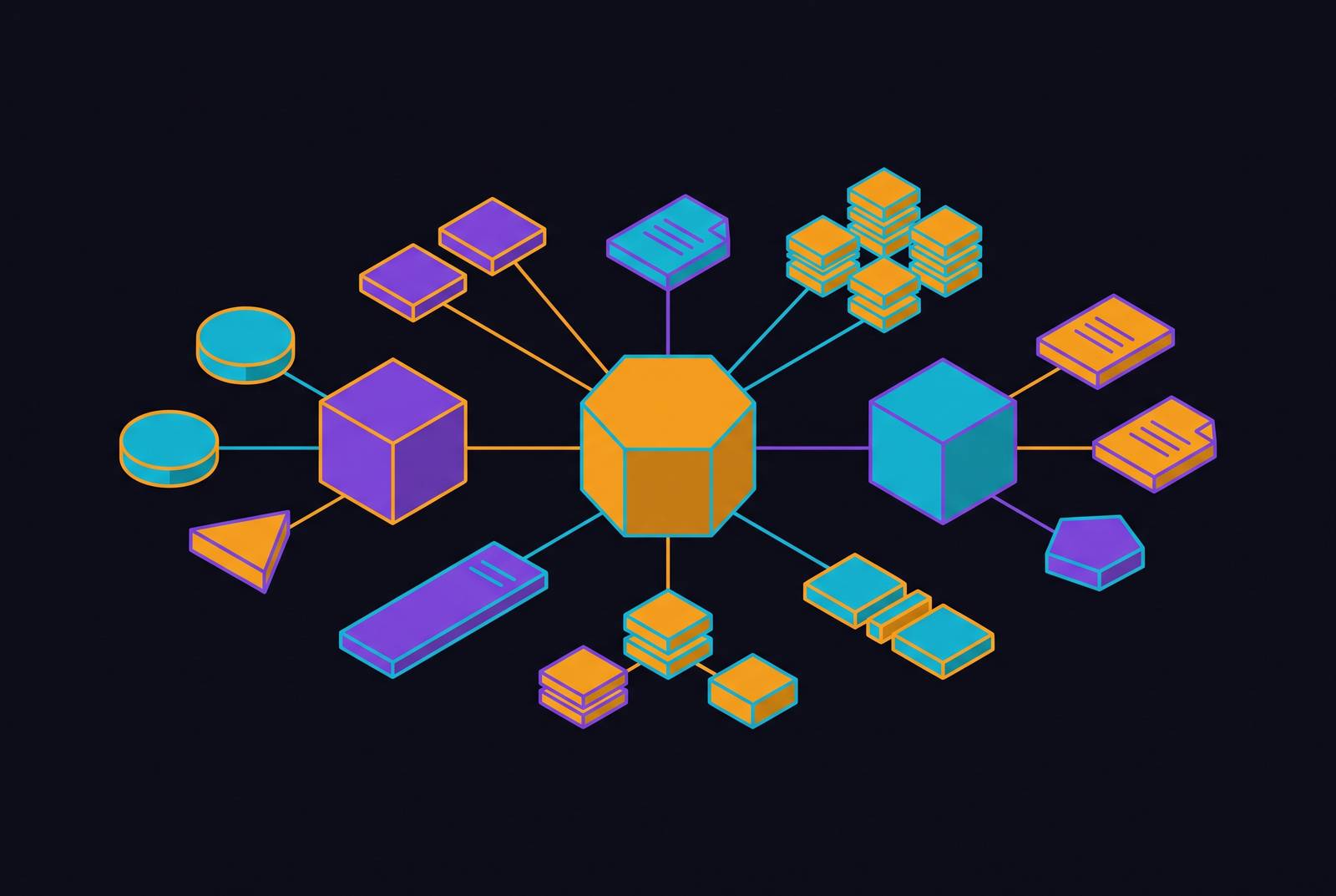
This layer separates a knowledge graph from a context graph. A knowledge graph gives an organization its nouns: the customers, the policies, the claims, the clean entities. A context graph adds the operational detail around those entities: lineage, decision traces, timing, ownership, how things get used. A graph supports that kind of multi-hop traversal natively. Document search does not. A decision node is one stop along that path, not the end of it.
Provenance belongs in the structure itself, not off to the side as metadata. Research on structured knowledge for AI systems describes an artefact called a Knowledge Card, which records the entities and relationships involved in a piece of reasoning, the logic that connects them, the conditions under which that reasoning loses validity, and the origin of every claim it contains. The same logic applies to a decision node: provenance isn't a label stuck on afterward, it's built into what the node is.
How the context graph connects decisions across data silos
Entity resolution makes a decision node useful by letting the graph recognize that the same customer, policy, agent, or exposure appears in more than one system under more than one name. Until that resolution happens, a decision that touched a person in one system can't be connected to what happened to that same person somewhere else.
This is where entity resolution does the real work. A customer might appear as "John Smith, john@example.com" in a CRM, as "J. Once the graph resolves that it's one person, a future agent looking at a similar case can follow all three threads without someone manually stitching the records together.
Picture an insurance file that spans underwriting, claims, and an earlier referral decision made for the same insured. None of this is a data warehouse copy sitting off to the side. It's a live connection between systems that still function as systems of record.
Institutional memory from decisions and outcomes linked over time
Once a decision node carries its measured outcome, and gets linked to the later decisions that referenced it, the graph starts to function as institutional memory. Not an archive of records, but a history a person or an agent can actually query to find out what worked, what failed, and under what conditions each held true.
The loop runs both directions. A new underwriter joining a team, or a new agent hire stepping into a role, can query prior decisions made on comparable risks or comparable candidates and see the full reasoning behind them, not just the outcome. That's a different kind of onboarding than reading a policy manual.
The Knowledge Card concept of recording when reasoning stops holding applies directly here. Models and agents will keep changing. A plain log can tell someone what happened. A decision graph built this way can answer a harder question: what should happen now, given everything that came before and whether those earlier conditions still hold.
Why governance and auditability require decision nodes
Regulators and auditors are starting to expect something specific for each AI-influenced decision: not a system log showing that an event occurred, but structured proof that the right inputs were weighed, the right policy applied, and a qualified human reviewed the outcome where review was required.
A defensible baseline for that evidence runs to roughly a dozen fields: a synchronized timestamp in UTC, a unique decision ID, the identity of the authenticated human user involved, the identity and version of the AI system, the identity and version of the model itself, the inputs with their sources attached, the specific rule or policy invoked, a human-readable account of the reasoning, the output, the downstream action taken, the human review or approval where applicable, and a tamper-evident proof that none of it was altered after the fact. It is a description of what the decision node already needs to contain if it's built correctly from the start, not a form to fill out after a decision gets made.
The regulatory clock on this is already running. The EU AI Act's transparency provisions took effect in August 2026. Readiness is thin: a large share of surveyed organizations said they lacked strong confidence they could pass an independent AI governance audit within 90 days. Teams run systems that can't produce evidence the graph was never built to hold, even though they know this is coming.
The distinction auditors are pressing on is the same one running through this whole piece: an access log shows that a system event took place, while a decision trace shows why a business outcome happened, which policy governed it, what alternatives got considered, and how comparable cases were handled before. Only the second one answers an examiner asking why a decision got made the way it did. For agentic systems that act directly on their own conclusions, dispatching a crew, approving a change, adjusting a control, the company running that agent has to be able to see and stand behind the knowledge driving it. A record of actions taken isn't the same thing as reasoning a person can inspect and govern.
Agent authority, approval gates, and revoke controls on decision nodes
Delegating authority to an agent only means something if that authority is written into the graph itself. When an agent's permitted actions, its approval requirements, and its budget limits exist as properties on nodes and edges rather than as instructions buried in a prompt, they can be checked, overridden, and pulled back at the graph level instead of relying on documentation someone has to remember to read.
Many current deployments don't meet that bar. Interrupt and escalation paths get defined before deployment, not improvised during an incident.
Interrupting an agent mid-task and taking it over are two different capabilities, and both need design work before they're needed in practice. Interruption means pausing or stopping an action already underway. Takeover means a person assumes direct control of the task itself. Teams set their own approval thresholds, quality standards, risk limits, budgets, and named owners for exceptions, and recurring work then runs inside whatever permissions and policies are currently in force.
Reversibility and delay cost determine how much autonomy a decision node should carry.
How much autonomy a decision node carries should track one thing above all: how easy it is to reverse the decision, and how fast and cheaply a mistake can be caught and corrected, rather than a blanket rule applied the same way to every agent action regardless of stakes.
Restocking a SKU that turns out to be the wrong call is reversible. Sending a regulated investment communication is a different animal entirely: once it reaches the customer, it's filed and falls under record-keeping obligations that can't be undone. That kind of decision belongs behind a human gate before it executes, not after.
The common enterprise posture right now, limiting AI autonomy to low-risk, reversible actions across the board, reads as cautious expansion rather than real confidence at scale, and that caution carries a cost of its own. Many teams start by having an agent investigate and recommend only, then expand into execution authority as the quality of its recommendations gets demonstrated over time, with read access and change permission kept separate the whole way through. That staged approach means the graph builds up evidence of decision quality before autonomy expands.
The insurance carrier case: what decision nodes look like across hiring, licensing, and educational support
Insurance is one of the clearest places to see this architecture at work, because a single regulated workflow pulls together structured data like policy records and claims history, unstructured material like adjuster notes, submissions, and photos, licensed human professionals making the final calls, and AI governance requirements, all at once. Every decision in that workflow touches all four at the same time.
The first problem the graph has to solve is simply getting the data into shape. A knowledge graph holds each insured, broker, policy, location, and claim as a single resolved entity, with the relationships between them made explicit.
One live deployment, built by Nodes, shows what this looks like across three connected workflows. In candidate evaluation, candidates were scored against location-specific top-performer profiles across more than 215 locations. Across more than 200 locations, these decision nodes become directly comparable to each other: which profile traits actually predicted retention, which locations overrode the system's recommendation and what happened afterward, and what the graph has learned by the time the next hiring cycle starts.
The second workflow tracks licensing, flagging where a newly hired agent has a gap in required credentials and following that person's progress toward closing it. Because the graph resolves this as the same person node used in the hiring decision, a later query can ask which hiring cohorts had the strongest licensing completion rates and what distinguished them from the rest. The third workflow supports new agents directly: a new hire's support history, licensing progress, and original hiring profile are all connected in the graph, giving an assistant working with that person real context a generic chatbot never would, with every interaction that changes a record remaining a traceable, approved action.
Taken together, the three workflows show something important about how this architecture scales: it doesn't need rebuilding for each new use. The decision nodes compound each time.
What the graph needs to hold as conditions change
A decision node is only as trustworthy as the conditions behind it. When the policy, the market, the regulation, or the risk profile that made a past decision correct has since changed, the graph needs to know that and surface it, rather than letting an agent treat an old decision as a safe template just because it's still sitting there.
A static graph, built once and left alone, rarely survives contact with production agents for long. A context graph has to carry temporal validity and policy context as structural elements, not as footnotes. The Knowledge Card principle of recording when reasoning stops holding is what makes a decision node safe to reuse rather than merely available to look at: the graph can flag that the conditions have shifted, not just confirm that a prior decision exists somewhere in the record.
Practically, that means every relationship in the graph carries a timestamp and, where it applies, an expiry date or a trigger for review. None of this runs on its own. Enterprise knowledge graph efforts tend to fail when ontology maintenance gets under-resourced, because the graph is only ever as current as the people and processes keeping its definitions, policy links, and entity matches up to date. That upkeep is an ongoing commitment, not a one-time build a team finishes and walks away from.
Starting with one workflow, one owner, one agreed baseline
The right place to start is one named workflow, with one person accountable for it, and a measurable outcome where the decision nodes that need capturing are already well understood and a baseline for success can be agreed before anything goes live.
That means settling the baseline, the success measures, who owns measurement, and the time period for comparison before weighing action against delay against doing nothing differently. Nodes, for instance, delivers a decision brief within 72 hours of getting complete, agreed data access, identifying at least $1 million in potential business value, backed by findings, options, and estimated costs of acting versus waiting; setup typically runs one to two weeks, with full implementation scoped and scheduled separately. Early recommendations should expose their own evidence and assumptions, showing what was found, what was assumed, and where the evidence runs thin, so a team can review, approve, and only then decide whether to authorize execution. That's how trust in a decision graph gets built over time.
The practical path most teams take starts with investigation and recommendations only, then expands into execution authority as quality and value get demonstrated, with read access and the ability to change records kept separate from day one. Each new deployment costs less to stand up than the one before it, and produces decisions that are better informed than the ones that came first, because they're built on a graph that already knows more than it did at the start.
This article was produced in collaboration with Nodes and developed with AI-assisted drafting and research support.